
Michael Trotobas
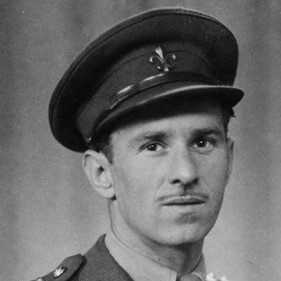
North Laine
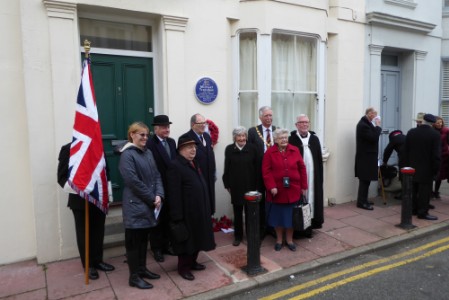
received its latest Blue Plaque on 27th November 2018, when the
World War Two secret agent, Michael Trotobas, was commemorated in a ceremony
outside his former home at I North Place.
The Blue
Plaque was unveiled in the presence of The Mayor of Chichester, Cllr Martyn
Bell, and representatives of The Brighton and Hove Commemorative Plaque panel
including Gabrielle Villermet, the NLCA representative on the Blue Plaque
panel, and a number of North Laine residents. Prayers were led by Father David
Biggs of the Chapel Royal, Brighton and a reading was read out by Paul McCue
who is author of ‘Brighton’s Secret Agents’ and a trustee of ‘The Secret WW2 Learning Network.’
Michael
Trotobas was born on 20 May 1914 at 1 North Place of an Irish mother and a
French father. Michael’s mother died when he was only nine years old and he was
sent to France to be brought up by an aunt. Living where he did in North Place
he most probably attended the infants’ school in Upper Gardner St and used the
slipper baths in Barrack Yard, just around the corner from his house. He would
also probably have visited the ‘flea pit’ Coronation Cinema in North Road –
just across from North Place. He went to school both in France and Ireland, and,
having completed his formal education drifted from job to job until he joined
the army in 1933 at the age of nineteen. Michael must have been a more than
competent soldier as he was promoted to sergeant in 1937.
The 2nd
Battalion of the Middlesex Regiment, Michael’s regiment, was part of the British Expeditionary Force
that was sent to France at the outbreak of war in September 1939 and remained
in northern France until the British army was evacuated from Dunkirk in June
1940. Michael was likely serving with the Middlesex regiment in France when he
was wounded and subsequently evacuated.
Once he had recovered from his injuries Michael was commissioned in to the Manchester Regiment. He was based at Ladysmith Barracks, Ashton-under-Lyne, until in June 1941 he joined the Special Operations Executive’s (SOE) French section. Having been brought up in northern France Michael spoke fluent French and with his military background was extremely useful to this new wartime organisation that was created by Winston Churchill and known as Churchill’s Secret Army. The aim of the organisation was to organise and arm resistance groups mainly in France and lead the fight back against Nazi Germany.
In his training Michael demonstrated the talents required for a secret agent, being described by his officers as intelligent and keen, although impulsive. He was soon deemed to be ready for his first operation which was to assess the possibility of setting up resistance groups in northern France. Under cover of darkness Michael and five other agents were parachuted in to France in September 1941. The operation was a complete disaster as within six weeks Michael and nine agents were arrested and sent to Mauzac Internment Camp. As soon as he was in prison Michael began plotting his escape and eventually in July 1942 managed to organise a mass escape of British officers which took him via the Pyrenees to home in England.
Michael
volunteered to go back to France and in
November 1942 he was again parachuted in to France. His task this time was to
set up a network of agents in the Lille area which he knew well from his youth.
The network was given the codeword ‘Farmer’ and it had its first success in
February 1943 when the group managed to derail a train causing forty trucks to
be badly damaged and caused the line between Lens and Bethune to be closed for
two days. Setting up the network was no easy matter as Michael had to deal with
many petty jealousies from different factions. Michael had the charisma though
to bring together a network of up to 100 agents and such was the respect that
he earned that he was nicknamed ‘Le Capitaine Michel’, the name which can be
found on the memorial in Lille to those in the Resistance who lost their lives.
Derailing
trains became a speciality of the group and soon it was derailing up to twenty
trains a week. On 27th June 1943 the group attacked the locomotive
works at Fives-Lille during which four million litres of oil were destroyed and
twenty two transformers damaged. Michael’s group had achieved what the RAF in
several operations had failed to do. To gain an insight in to the layout of the
railway works at Fives, Michael dressed up as a factory worker and told the
guard that he was there to investigate terrorist activity, a ruse he used at
other such works. Similar attacks were subsequently carried out at Armentieres,
Amiens, Boulogne and Calais.
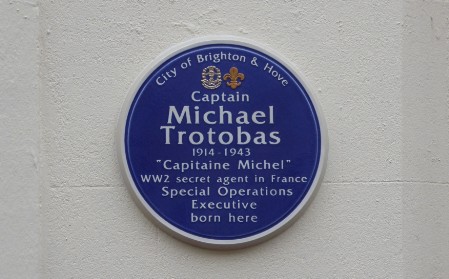
The Blue Plaque outside 1 North Place
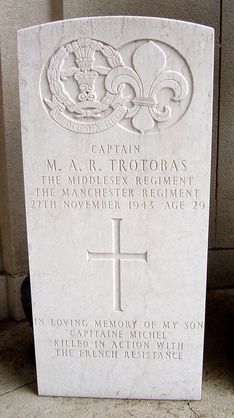
The success of the group made Michael an important target for the Nazis who offered a reward of a million francs for information leading to his arrest. Eventually the Nazis got the information they wanted from a captured agent and at dawn on November 27th 1943 a number of Gestapo vehicles converged on the house in Lille where Michael was staying. The building was surrounded by the Gestapo and when Michael opened the door to the inspector there was a shoot-out. The inspector was killed by Michael who was himself then shot down in a hail of bullets.
The street
where this shootout occurred was subsequently renamed Rue du Capitaine Michel,
in recognition of what Michael Trotobas achieved in the short time he worked as
an SOE agent in France. Although he was recognised in France and recommended
for the Victoria Cross, Michael never received the attention in his native
country that he deserved -that is until now.
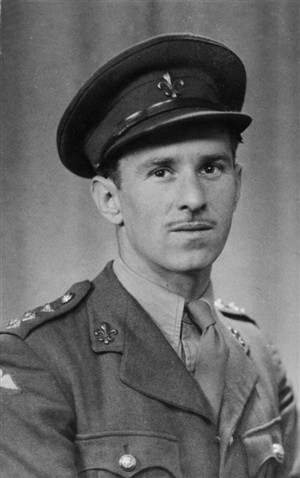
As well as
the Blue Plaque to mark the birthplace and home of Michael Trotobas there have
in the last few years two books about him and the agents he worked with.
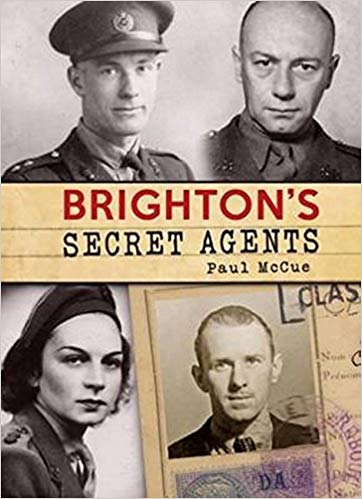
‘Brighton’s Secret Agents’ by Paul McCue tells the story of four Brighton and
Hove-born agents honoured with blue plaques. He details the creation and
post-war demise of the SOE, its training methods and the missions of the four agents who were from Brighton. The
second book is by Stewart Kent called ‘Agent Michael Trotobas and SOE in
Northern France’. The book uses material from people who knew Michael,
including the author’s mother to tell a compelling story of a year in the life
of one resistance group.